How Can I Implement Advanced Data Analytics And Machine Learning Models For Content Recommendations On WordPress?
In this article, we will explore the fascinating world of advanced data analytics and machine learning models and how you can implement them to enhance content recommendations on your WordPress website.
Discover the power of these cutting-edge technologies and learn how to leverage them to provide your audience with personalized and highly relevant content suggestions.
With step-by-step guidance and practical tips, you can unlock new user engagement and satisfaction levels on your WordPress platform. So, let’s dive in and explore the possibilities together!

Understanding Advanced Data Analytics and Machine Learning Models
Definition and purpose
Advanced data analytics and machine learning models are powerful tools for analyzing and interpreting large amounts of data.
These models allow you to uncover patterns, make predictions, and gain valuable insights from your data. By leveraging these techniques, you can improve decision-making, enhance the user experience, and drive better business outcomes.
Advanced data analytics aims to extract and transform raw data into valuable information that can be used for various purposes.
It involves data cleaning, preprocessing, and analysis techniques to discover patterns, trends, and correlations within the data.
On the other hand, machine learning models aim to develop algorithms that can learn from the data and make predictions or take actions without being explicitly programmed.
Benefits of content recommendations
Content recommendation is a critical application of advanced data analytics and machine learning models.
Implementing these models on your WordPress website can enhance user engagement, increase user satisfaction, and drive more conversions.
With advanced data analytics, you can analyze user behavior, preferences, and interactions with your website.
This information can then create personalized recommendations for each user, suggesting highly relevant and exciting content.
By leveraging machine learning models, you can continuously improve the accuracy of these recommendations, resulting in a customized and tailored user experience.
Additionally, these models can help you understand which content performs best and which factors contribute to its success.
By analyzing user engagement metrics and feedback, you can optimize your content strategy, create more engaging and shareable content, and drive more traffic to your website.
Getting Started with Data Analytics and Machine Learning on WordPress
Choosing a hosting platform
Before tackling data analytics and machine learning on WordPress, it is important to choose a hosting platform that can support these techniques’ computational requirements.
Please look for a hosting provider with enough processing power, memory, and storage to handle large datasets and complex algorithms.
Installing necessary plugins
Once you have chosen a hosting platform, you should install the necessary plugins on your WordPress website.
Several data analytics and machine learning plugins can help you analyze and interpret your data.
Please look for plugins that offer advanced features such as data preprocessing, exploratory data analysis, and machine learning model implementation.
Preparing the data
Before you can start analyzing your data, it’s essential to ensure it is clean, structured, and ready for analysis.
This involves identifying relevant data sources, collecting the data, and performing data cleaning and preprocessing steps.
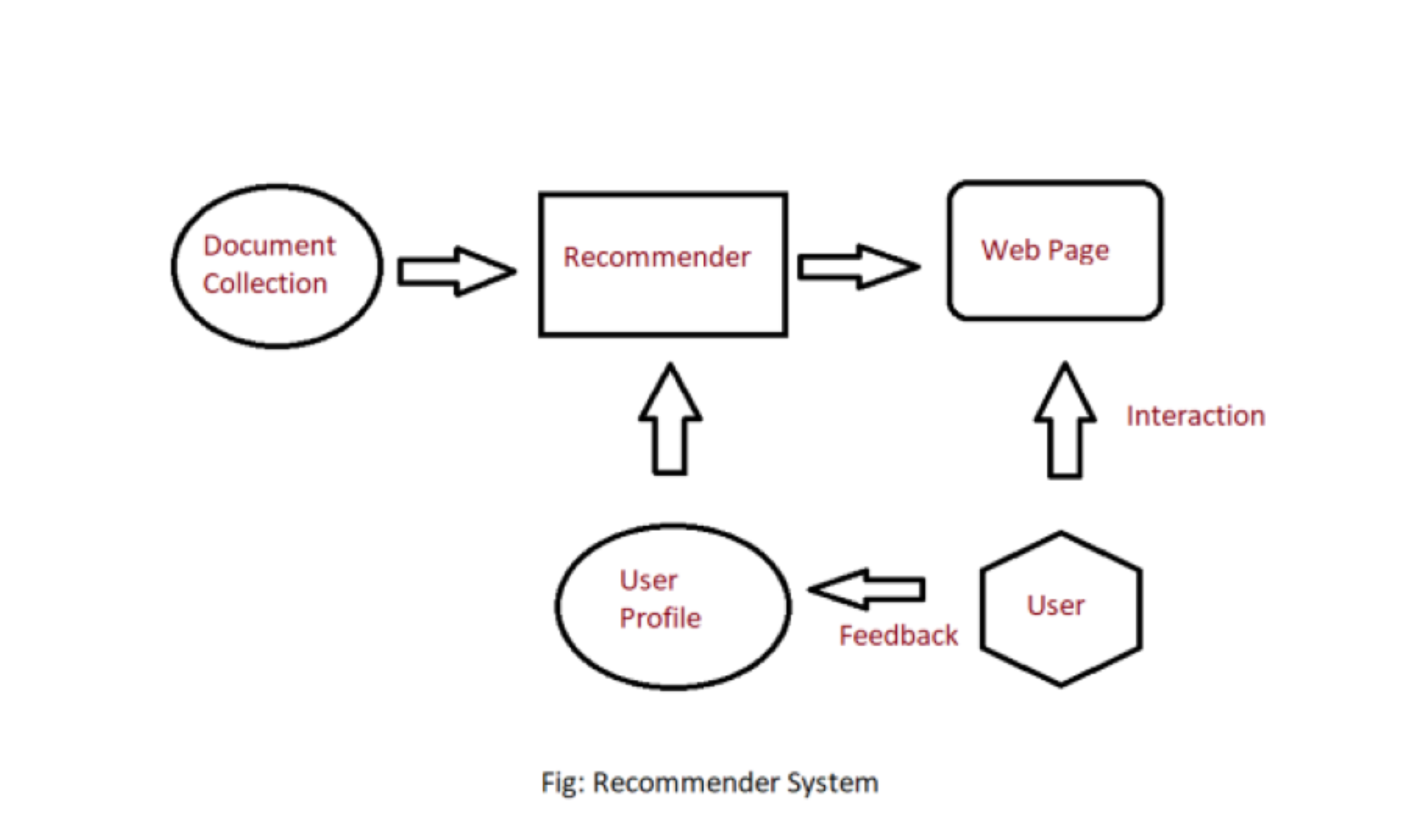
Collecting and Preparing Data for Analysis
Identifying relevant data sources
To perform effective data analytics, you must identify the relevant data sources containing the information you want to analyze.
This could include data from your WordPress website, such as user behavior, content, and metadata. You may also want to incorporate external data sources, such as social media, demographic, or industry-specific data.
Cleaning and preprocessing the data
Once you have identified your data sources, the next step is to clean and preprocess the data. This involves removing irrelevant or duplicate data, handling missing values, and transforming the data into a format suitable for analysis.
Cleaning and preprocessing the data ensures you have high-quality data and reduces the risk of erroneous or biased results.
Creating a data pipeline
Streamlining your data analytics process requires creating a data pipeline that automates data collection, cleaning, and preprocessing.
This involves developing scripts or workflows that automatically retrieve data from various sources, perform data cleaning and preprocessing steps, and store the processed data in a structured format. By creating a data pipeline, you can save time and effort in preparing your data for analysis.
Exploratory Data Analysis
Analyzing data patterns and distributions
Exploratory data analysis is essential in understanding your data and identifying underlying patterns or distributions.
This involves performing statistical analyses, calculating summary statistics, and visualizing data using charts and graphs.
By analyzing data patterns and distributions, you can gain insights into your data’s characteristics and identify outliers or anomalies.
Identifying correlations and trends
Another goal of exploratory data analysis is to identify correlations and trends within the data. This involves calculating correlation coefficients, performing regression analysis, and plotting time series data.
By identifying correlations and trends, you can uncover relationships between variables, make predictions, and better understand the factors influencing user behavior or content performance.
Visualizing data insights
To communicate your data insights effectively, it’s important to visualize your findings using charts, graphs, and interactive visualizations.
This allows you to present complex data clearly and concisely, making it easier for stakeholders to understand and interpret the insights. Visualizations can also help you identify patterns or trends that may take time to be apparent from raw data.

Selecting and Implementing Advanced Data Analytics Techniques
Regression analysis
Regression analysis is a statistical technique for modeling and analyzing the relationship between a dependent variable and one or more independent variables.
In content recommendations, regression analysis can predict user engagement metrics, such as click-through or conversion rates, based on content attributes, user demographics, or contextual information.
Classification algorithms
Classification algorithms are machine learning techniques that assign data points to predefined classes or categories.
In content recommendations, classification algorithms can divide users into segments or personas based on their behavior, preferences, or characteristics. This information can then be used to tailor content recommendations to each user segment.
Cluster analysis
Cluster analysis is a technique used to group similar data points based on their attributes or characteristics.
In the context of content recommendations, cluster analysis can identify user groups with similar preferences, interests, or behaviors. This information can then group users into different clusters and provide personalized content recommendations for each cluster.
Introduction to Machine Learning Models
Supervised learning
Supervised learning is a type of machine learning where an algorithm learns from labeled training data to make predictions or take actions.
In content recommendations, supervised learning algorithms can learn from historical user interactions, such as clicks or ratings, to predict the likelihood of a user interacting with a specific piece of content. These algorithms can then generate personalized content recommendations for each user.
Unsupervised learning
Unsupervised learning is a type of machine learning where an algorithm learns patterns and relationships from unlabeled data.
In the context of content recommendations, unsupervised learning algorithms can analyze user behavior data to identify hidden patterns or clusters of users with similar preferences.
These algorithms can provide personalized content recommendations without explicit user feedback or labels.
Reinforcement learning
Reinforcement learning is a type of machine learning where an agent learns to interact with an environment to maximize a reward.
In the context of content recommendations, reinforcement learning algorithms can learn from user feedback, such as clicks or conversions, to optimize the content recommendations over time.
These algorithms can improve the accuracy and relevance of their recommendations by continuously learning and adapting to user feedback.
Implementing Machine Learning Models for Content Recommendations
Preparing the training dataset
To implement machine learning models for content recommendations, you must prepare a training dataset containing historical user interactions and corresponding content attributes.
This dataset should be representative of the user population and cover a wide range of user behaviors and preferences. The training dataset trains the machine learning algorithms and enables them to make accurate predictions or recommendations.
Choosing appropriate machine learning algorithms
The choice of machine learning algorithms depends on your content recommendation system’s specific requirements and characteristics.
Commonly used algorithms for content recommendations include collaborative filtering, matrix factorization, decision trees, and neural networks. It’s essential to select algorithms suitable for your data and capable of handling the complexity of your recommendation problem.
Training and optimizing the model
Once you have selected the appropriate machine learning algorithms, the next step is to train and optimize the models using the training dataset.
This involves adjusting the model parameters, evaluating the model performance, and iteratively refining the model until it reaches the desired level of accuracy and performance.
Monitoring the model’s performance regularly and adjusting it to ensure optimal performance is essential.
Integrating Data Analytics and Machine Learning Models with WordPress
Developing custom plugins and functionalities
You can develop custom plugins or functionalities that leverage these techniques’ capabilities to integrate data analytics and machine learning models with WordPress.
This could involve developing plugins that automate data collection and preprocessing, provide advanced data visualization capabilities, or implement machine learning models for content recommendations.
Creating recommendation systems
One critical application of data analytics and machine learning on WordPress is the creation of recommendation systems.
These systems can provide users personalized and tailored content recommendations based on their behavior, preferences, or characteristics.
Integrating recommendation systems into your WordPress website can enhance user engagement, increase user satisfaction, and drive more conversions.
Implementing personalization features
In addition to recommendation systems, data analytics and machine learning can be used to implement personalization features on your WordPress website.
This could include personalized landing pages, dynamic content based on user preferences, or targeted marketing campaigns.
By leveraging personalization features, you can create a customized user experience that resonates with individual users and increases their engagement with your website.

Evaluating the Performance and Accuracy of Models
Metrics and evaluation techniques
It’s important to define appropriate metrics and evaluation techniques to evaluate the performance and accuracy of your data analytics and machine learning models.
Commonly used metrics for content recommendations include precision, recall, F1 score, and mean average precision. These metrics help you measure the effectiveness of your models and compare different models or algorithms.
Cross-validation and testing
Cross-validation is a technique for assessing the performance of machine learning models by splitting the data into training and testing subsets.
This helps you estimate how well the model will perform on unseen data and avoid overfitting, where the model performs well on the training data but fails to generalize to new data.
Cross-validation allows you to evaluate the model’s performance across multiple iterations and ensure its robustness.
Handling overfitting and bias
Overfitting occurs when a machine learning model is overly complex and captures noise and random variations in the training data, resulting in poor performance on new data.
You can use regularization, feature selection, or ensemble learning techniques to handle overfitting. It’s also important to be aware of bias in your data and models, as bias can lead to unfair or discriminatory recommendations. Regular monitoring and auditing of your models can help identify and mitigate bias.
Understanding advanced data analytics and machine learning models is vital to improving decision-making, enhancing the user experience, and achieving better business outcomes on WordPress.
Implementing these techniques can help you analyze user behavior, make personalized content recommendations, and optimize your website for increased engagement and conversions.
Key steps in implementing advanced data analytics and machine learning on WordPress include choosing a suitable hosting platform, installing necessary plugins, and preparing the data for analysis.
Exploratory data analysis helps you understand your data and identify patterns and trends. In contrast, advanced techniques like regression analysis, classification algorithms, and cluster analysis enable you to implement personalized content recommendations.
Integrating data analytics and machine learning with WordPress involves developing custom plugins and functionalities, creating recommendation systems, and implementing personalization features.
Evaluating the performance and accuracy of your models requires using appropriate metrics, cross-validation, and handling overfitting and bias.
Prospects of data analytics and machine learning on WordPress
As technology advances, the future of data analytics and machine learning on WordPress looks promising.
We can expect even more sophisticated and accurate content recommendations with more robust algorithms, increased computational capabilities, and advancements in data collection and preprocessing techniques.
Additionally, integrating data analytics and machine learning with other aspects of website management, such as SEO or marketing automation, can further enhance the overall user experience and drive better results.
==========
Content 10/10/G