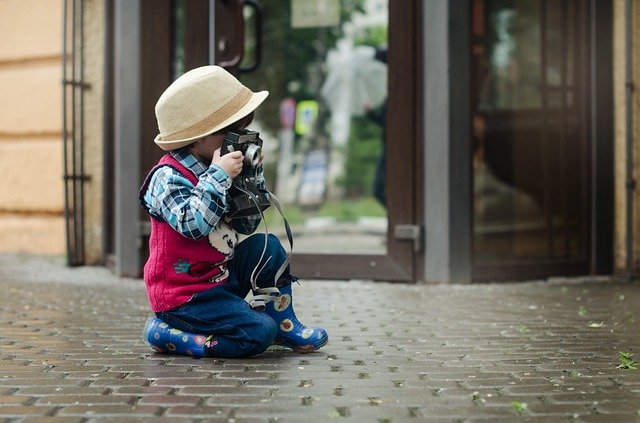
Are you itching to start your own concepts for photography? Do you actually know how and where to begin? Do you know what can work for your photographs? If you are at a loss for answers, the tips you will find here will help you get underway!
Create depth when you shoot landscapes. An object in the foreground of your shot can create the illusion of depth by providing scale. Choosing an aperture that is small — no larger than f/8 on a consumer level digital camera or f/16 on an SLR using a full-frame sensor — will keep everything from the background to the foreground sharp.
A fantastic photography tip is to constantly look at other photographers for inspiration. If you look at other photographers’ work, you can learn new strategies for capturing a scene.
A vital photography composition factor, is framing. You should zoom in on your main focal point to eliminate anything that takes away from your main subject. This will avoid a cluttered photo.
When you are traveling, start shooting photos right when you are leaving. While location shots will be in abundance once you arrive at your destination, the journey itself is also worthy of being recorded. Pictures can memorialize the journey itself/ You can, for example, find fascinating photography subjects at an airport.
As a photographer, it is important that you keep your batteries well charged so you never have to miss out on the opportunity to take a great picture. Using the LCD on a digital camera drains the batteries, so always ensure that the battery is fully charged before leaving the house. You will want to carry extra camera batteries with to be prepared for any shot.
Photograph people often. However, it is important to always ask your subject’s permission before snapping shots. Pictures like these help you to find more vivid memories when you look back, even if at the time the people seemed unremarkable. What you should look for is casual clothing and candid expressions.
A lot of the time you will have the main subject looking right at the camera. If you want to make your photos a little more interesting, have your subject fix his gaze on an object outside the camera’s field of view. Another thing you can do is have the subject look at something in the frame, rather than at the camera itself.
Lighting is one of the most important considerations when taking pictures. The ideal lighting for outside photos is provided by the sun when it is low on the horizon. If the sun is very high, it will cause lots of shadows and even squinting subjects. Consider a position where your subject has the sun shining on them from the side.
Red Eye
While it is common, red eye can make a great picture less than worthy of being showcased. Turn off the flash if at all possible, as this will exacerbate red eye conditions. If you must have the light provided by a flash accessory, then instruct your subject to avert their gaze from your lens. Some cameras come with an anti red eye feature.
Your camera can serve as a great tool for when you are taking shots. Using a depth of field that is more shallow can be good for blurring backgrounds, while making your subject stand out.
The key to a great picture is knowing what scenes and environments require flash or not. Don’t turn it on haphazardly. If you use too much light, you may wash out the subject and spoil the picture. Also, think about using it when you are in a severe low-light scenario.
Decide what the final use of your picture will be before you shoot it. Sometimes it is better to shoot a picture horizontally and other times vertically. While it is possible to change the photo from one orientation to another after it has been taken, sometimes, it is best to make sure that you take it right originally so that you get into the frame all you intended.
Balance is essential in photography. One of the easier ways to make your pictures art gallery worthy is to have all the objects in the picture carefully balanced. If you end up with some distracting images, use photographic editing software to crop your image.
Get really close to your shot. Use the zoom feature of your camera, or get physically closer for the shot. Make the photo’s subject fill the frame. Too much scenery or visual noise, no matter how interesting, distracts the eye from where the focus should be: the subject. When the subject is close, details appear more engaging and visible.
Holding a camera may seem basic, but it can make or break your pictures. Unless you follow appropriate best practices for carrying and holding your camera, you will have difficulty ensuring a stable image. Hold your arms fairly close to you so that you can support the lens with your other hand.
Are you still unsure of where to begin with photography? Will you be able to find a good place to start? What will make the best photographs? If you can now provide an answer to these questions, then you have read and understood the previous tips and are ready to take better photos.